Visualizing the Game: Leveraging Gaming Controllers Set Vector Illustrations in Modern Design
In the rapidly expanding universe of digital entertainment, visual communication is just as critical as the gameplay itself. Whether you are designing a landing page for an esports tournament, creating packaging for new hardware, or developing marketing assets for a streaming platform, the imagery you choose sets the tone for your entire brand. This is where a Gaming Controllers Set Vector Illustration becomes an indispensable asset. Unlike raster images that lose quality when resized, vector illustrations offer crisp, scalable, and customizable representations of modern gaming hardware that speak directly to enthusiasts and casual players alike.
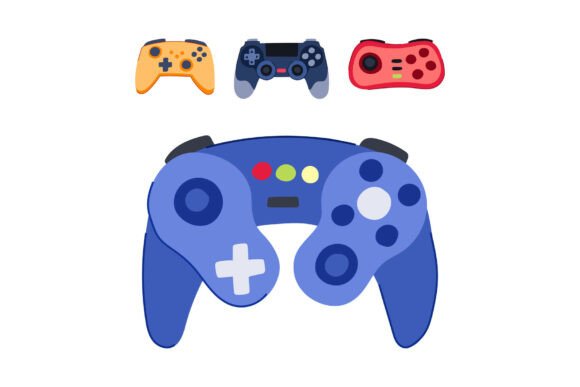
The specific aesthetic of a group of colorful video game controllers in various styles on a white background serves a distinct purpose in contemporary design. It strips away the noise, focusing entirely on the form factor and diversity of the hardware. This clean presentation symbolizes the breadth of modern gaming, from competitive esports to casual digital entertainment, making it a versatile foundation for countless creative projects.
The Strategic Advantage of Vector Formats for Hardware Imagery
When selecting visual assets for gaming-related content, format matters significantly. A Gaming Controllers Set Vector Illustration provides technical benefits that directly impact workflow efficiency and final output quality. Vectors are mathematically defined paths rather than pixel grids, meaning they can be scaled from a business card size to a billboard without any loss of fidelity. For designers working across multiple touchpoints, this scalability eliminates the need to source separate high-resolution files for every application.
Beyond resolution, vectors offer unparalleled editability. Gaming hardware evolves quickly, with colorways and button layouts changing frequently. With a vector set, a designer can adjust hues to match a specific team’s branding or modify shapes to reflect newer console generations without starting from scratch. This flexibility is crucial in an industry where timeliness and brand consistency are paramount. The ability to isolate individual controllers within a grouped illustration also allows for modular design, enabling creators to feature a single arcade stick for a fighting game article or a full array for a general hardware review.
Symbolism in Controller Diversity
The inclusion of "various styles" within these illustrations is not merely an artistic choice; it is a semantic signal. Modern gaming is no longer monolithic. By depicting standard gamepads alongside flight sticks, racing wheels, and retro-style pads, the illustration acknowledges the vast ecosystem of digital entertainment. This visual diversity resonates with different segments of the audience:
- Esports Professionals: Recognize high-performance, ergonomic designs associated with competitive play.
- Retro Enthusiasts: Connect with classic silhouettes that evoke nostalgia and gaming history.
- Accessibility Advocates: Appreciate the representation of adaptive controllers and varied input methods.
- Casual Gamers: See familiar, approachable shapes that signify fun and leisure.
When utilizing a Gaming Controllers Set Vector Illustration, you are effectively communicating inclusivity. You are telling the viewer that your content, product, or service understands and respects the multifaceted nature of play.
Practical Applications Across Digital and Print Media
The utility of a group of colorful video game controllers on a white background extends far beyond simple decoration. This specific composition acts as a functional design element in numerous professional scenarios. The white background is particularly significant; it provides negative space that allows text overlays, UI elements, or product shots to coexist without visual conflict. In web design, this negative space improves readability and guides the user's eye toward call-to-action buttons or key information.
Consider the following practical use cases where these vector sets excel:
- E-Commerce Category Headers: Online retailers selling peripherals need clear, attractive banners that instantly communicate "gaming accessories." A vector set loads faster than complex photography and maintains sharpness on high-DPI mobile screens.
- Event Branding Kits: Esports tournaments often require cohesive signage, badges, and stream overlays. Vectors ensure that controller icons look identical on a lanyard and a main stage backdrop.
- Editorial Content: Tech blogs and magazines reviewing hardware benefit from stylized illustrations that break up dense text while maintaining a consistent visual theme throughout the publication.
- App Interfaces: Gaming companion apps or launcher software use these icons for navigation menus, settings, and profile customization options.
Color Psychology and Brand Alignment
The "colorful" aspect of these illustrations plays a vital role in emotional engagement. Color in gaming is rarely accidental; it carries cultural weight. Neon greens and purples might suggest cyberpunk aesthetics or streaming culture, while primary reds and blues often align with legacy console branding. When integrating a Gaming Controllers Set Vector Illustration into a project, the ability to recolor these elements allows designers to tap into established psychological associations.
For instance, a wellness app focused on gaming ergonomics might opt for softer pastels or calming teals within the vector set to reduce anxiety and promote health. Conversely, a promotional campaign for a high-octane shooter might saturate the vectors with aggressive oranges and stark blacks. Because the base asset is a vector, these tonal shifts are instantaneous, allowing for rapid A/B testing and seasonal updates without commissioning new artwork.
Selecting the Right Asset for Your Workflow
Not all vector illustrations are created equal. When sourcing or commissioning a Gaming Controllers Set Vector Illustration, several qualitative factors should influence your decision. The goal is to find an asset that balances stylistic appeal with technical robustness.
Anatomical Accuracy vs. Stylization: Determine the level of realism required. Hyper-realistic vectors with detailed button textures and grip patterns work best for hardware reviews or retail environments. However, flat or semi-flat stylized vectors are often superior for UI design, infographics, and broad marketing materials where clarity trumps detail. Overly complex vectors can sometimes clutter a layout, so matching the complexity to the context is essential.
Layer Organization: Open the file before committing. Well-organized vector files have named layers and grouped elements. If every button, stick, and cord is on a single flattened layer, the editability advantage is lost. Professional-grade assets allow you to toggle visibility, swap colors globally, or rearrange components effortlessly.
Licensing and Commercial Use: This is a non-negotiable consideration. Ensure the license covers your intended usage, especially for commercial projects like merchandise or paid advertising. Some licenses restrict the number of impressions or require attribution. Investing in a premium, royalty-free license often saves legal headaches and supports the artists who create these valuable resources.
Integrating Vectors into Responsive Web Design
In the era of responsive design, static images are increasingly becoming liabilities. A Gaming Controllers Set Vector Illustration shines when implemented as SVG (Scalable Vector Graphics) code directly within HTML. This approach offers performance benefits, as SVGs are typically smaller in file size than PNG or JPEG equivalents. Furthermore, SVGs can be animated via CSS or JavaScript, adding interactivity without heavy load times.
Imagine a webpage where hovering over a specific controller in the set highlights it and reveals specs, or where the controllers subtly float to create a sense of dynamism. These micro-interactions enhance user experience and dwell time, signaling to search engines that the content is engaging. By treating the illustration as code rather than just an image, developers unlock a layer of functionality that raster graphics simply cannot provide.
Future-Proofing Visual Assets
The gaming industry moves at a breakneck pace. New consoles launch, input standards evolve, and aesthetic trends shift annually. One of the most overlooked benefits of maintaining a library of high-quality Gaming Controllers Set Vector Illustrations is longevity. While a photograph of a specific controller model may look dated within two years, a well-designed vector representation captures the essence of the form factor rather than its transient details.
This abstraction allows assets to remain relevant longer. A stylized gamepad silhouette represents "gaming" universally, regardless of whether the current market leader is Sony, Microsoft, or Nintendo. For agencies and brands building long-term identity systems, this timelessness translates to cost savings and brand stability. Instead of reshooting or redrawing assets for every minor trend cycle, teams can refresh existing vectors with updated accents or compositions.
Ultimately, the choice to utilize a group of colorful video game controllers in various styles on a white background is a strategic design decision. It bridges the gap between technical precision and creative expression, serving the needs of marketers, developers, and designers simultaneously. By understanding the functional qualities, symbolic weight, and practical applications of these vector illustrations, professionals can create more effective, accessible, and visually compelling content that truly resonates with the modern gaming community.