Sacred Geometry Alhambra Patterns: Evaluating Digital Assets for Creative Projects
The intersection of historical Islamic art and modern digital fabrication has created a unique niche for designers and crafters. Sacred Geometry Alhambra Patterns represent more than just decorative motifs; they are mathematically precise structures derived from centuries of architectural tradition, now adapted for contemporary digital use. When evaluating these assets for projects ranging from apparel to home decor, it is essential to understand the technical specifications, aesthetic distinctions, and practical limitations that differentiate high-quality digital downloads from generic vector packs or rasterized clip art.
For creators aged 20 to 50 who balance artistic vision with production realities, choosing the right pattern resource involves comparing resolution, texture authenticity, and versatility. This analysis explores where distressed, solid-color Alhambra designs fit within the broader landscape of digital design assets, helping you determine if this specific style aligns with your current project requirements or if an alternative approach would yield better results.
Defining the Aesthetic: Historical Precision Meets Distressed Texture
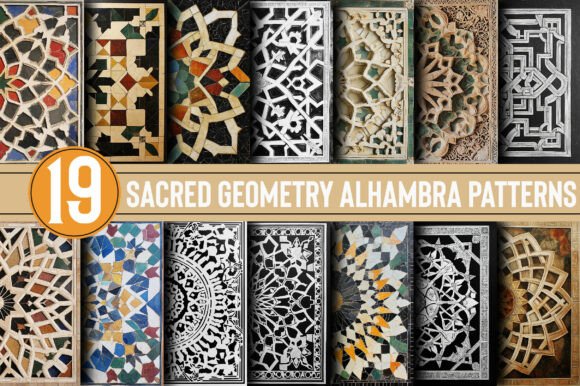
Sacred geometry in the context of the Alhambra refers to the complex tessellations and star patterns found in Nasrid palace architecture. Unlike organic or floral Art Nouveau styles, these patterns rely on strict geometric rules, rotational symmetry, and infinite repeatability. However, when sourcing these as digital PNG files, the critical differentiator is often the treatment of the line work.
Many digital repositories offer pristine, sharp-edged vectors of Islamic geometry. While mathematically perfect, these can sometimes appear sterile or overly clinical when applied to physical products like cotton t-shirts or textured paper. The specific value proposition of distressed solid-color Alhambra patterns lies in their simulated age and tactile quality. The distressed effect introduces micro-imperfections that mimic weathered plaster, carved wood, or vintage screen printing. This texture bridges the gap between digital precision and analog warmth, making the designs particularly suitable for projects aiming for a heritage, bohemian, or artisanal aesthetic rather than a futuristic or corporate look.
Technical Specifications and Production Suitability
When comparing digital assets, technical specifications dictate the ceiling of your output quality. For print-on-demand and DIY applications, the standard benchmark for professional results is 300 DPI at the intended print size. Assets marketed as Sacred Geometry Alhambra Patterns typically adhere to a 12×12 inch format (3600 x 3600 pixels) with transparent backgrounds. Understanding why this specification matters requires comparing it to common alternatives.
- Versus Standard Web Graphics: Many free resources are 72 DPI RGB images. Scaling these to 12 inches results in pixelation and jagged edges, especially in intricate geometric intersections. High-resolution PNGs maintain crispness even when the distressed texture is examined closely.
- Versus Vector Files (SVG/EPS): Vectors are infinitely scalable and ideal for large-format signage or laser cutting. However, vectors do not natively support complex raster distress textures without significant file bloat or conversion. If your goal is a textured, vintage print on fabric, a high-res PNG is often superior to a flat vector because the texture is baked into the pixel data, ensuring consistent rendering across different RIP software and printers.
- Versus Seamless Pattern Rolls: Some resources sell continuous yardage patterns. While excellent for upholstery, they lack the compositional focus of a 12×12 centered motif. Individual PNG tiles offer greater flexibility for placement on discrete items like mug wraps, phone cases, or chest prints, whereas seamless rolls require masking and cropping that can disrupt the geometric center.
The transparent background is another non-negotiable feature for this category. It allows for layering over colored substrates without the need for manual extraction. For dark garments or colored cardstock, this saves significant post-processing time compared to flattening white-background JPEGs.
Comparative Analysis: When to Choose Raster vs. Vector
Decision-making in digital asset acquisition should be driven by the end-use application. Sacred Geometry Alhambra Patterns in PNG format excel in specific scenarios but present tradeoffs in others. Recognizing these boundaries prevents frustration during the production phase.
Best-Fit Scenarios for Distressed PNGs
This format is the optimal choice for direct-to-garment (DTG) printing, sublimation on polyester blends, and digital scrapbooking. The distressed texture interacts favorably with fabric grain, creating a cohesive final product that looks printed rather than stamped. Additionally, for Cricut or Silhouette users creating vinyl decals, the pre-distressed edges can create a more organic weed line, though this depends heavily on the cutter’s blade settings. For framed wall art, the 3600px resolution provides sufficient detail for gallery-quality prints up to the native 12-inch size, capturing the nuance of the geometric interplay without requiring upscaling algorithms.
Limitations and Alternative Considerations
If your project requires resizing beyond 12 inches, such as a duvet cover or wall mural, fixed-resolution PNGs will degrade. In this case, seeking true vector sources or AI-generated upscaled versions is necessary. Furthermore, if you intend to modify the color palette extensively or separate elements for multi-color screen printing, a flattened PNG presents challenges. While solid-color designs are easier to recolor using blend modes in Photoshop or Procreate, they lack the editable layers of a source file. Designers requiring total chromatic control or structural editing should prioritize layered PSDs or SVGs over pre-rendered PNGs, even if the initial aesthetic appeal of the distressed PNG is higher.
Evaluating Versatility Across Mediums
The utility of Sacred Geometry Alhambra Patterns extends beyond apparel, but performance varies by medium. A comparative evaluation helps manage expectations for different DIY endeavors.
Apparel and Textiles: This is the strongest use case. The solid-color nature of these specific designs ensures high contrast on both light and dark fabrics. The distressed effect reduces the visual weight of the ink, preventing the "heavy plastic" feel associated with dense geometric prints on shirts. Compared to full-color photographic prints, these graphic designs generally have better wash fastness and breathability.
Paper Goods and Stationery: For handmade cards and journaling, the 300 DPI resolution ensures that fine geometric lines remain distinct. However, users should be aware that monitor calibration affects color perception. A deep indigo on screen may print as navy or purple depending on the printer profile. Unlike vector graphics which can be assigned spot colors for professional offset printing, PNGs rely on CMYK conversion, introducing slight variability. For critical color matching in stationery, ordering a physical proof is always recommended over relying solely on digital previews.
Hard Substrates (Mugs, Phone Cases, Tumblers): Curved surfaces introduce distortion. Geometric patterns, particularly those with radial symmetry like Alhambra stars, can highlight warping if not aligned perfectly. Compared to organic or abstract patterns, sacred geometry demands higher precision in placement. The advantage of the 12×12 square format is that it provides ample bleed area for wrapping around cylindrical objects, whereas smaller assets might leave gaps or require stretching that distorts the mathematical proportions.
Practical Decision Factors for Buyers
When selecting a pack of 19 designs versus other options, consider the coherence of the collection. Alhambra patterns are historically categorized by their underlying grid systems (e.g., 8-point, 12-point, or 16-point stars). A curated collection offers stylistic consistency that mixing random downloads cannot achieve. This consistency is vital for creators building a product line or a themed event suite.
Additionally, evaluate the licensing and support ecosystem. Digital instant downloads eliminate shipping wait times, allowing for immediate prototyping. However, the absence of a physical item means quality assurance rests entirely on the file description and seller reputation. Reliable resources provide clear documentation on resolution and color profiles. If a listing lacks specific pixel dimensions or DPI information, it is a significant risk factor. Professional-grade assets explicitly state "300 DPI" and "Transparent Background" because these are the metrics that determine commercial viability.
Finally, consider the learning curve. While these patterns are ready-to-use, maximizing their impact requires understanding composition. Sacred geometry is inherently balanced; placing it off-center or cropping it arbitrarily can break the visual harmony. Users accustomed to freeform illustration may need to adjust their workflow to respect the symmetrical constraints of Alhambra design. Conversely, for those seeking structure and order in their creative work, these patterns provide a disciplined framework that accelerates the design process while maintaining high aesthetic standards.
Making the Final Selection
Sacred Geometry Alhambra Patterns in distressed PNG format occupy a specific middle ground in the digital asset market. They offer more character than sterile vectors and significantly higher utility than low-res web images. They are ideal for creators focused on tangible, textured products where historical resonance and visual warmth are priorities. However, they are not a universal solution for large-format or structurally editable work.
By weighing the technical specs against your specific output needs—whether that is a vibrant tumbler wrap, a subtle greeting card, or a bold apparel piece—you can determine if this resource type serves your current objectives. The combination of 3600px resolution, transparent layering, and authentic texturing makes these files a robust option for adult creators seeking professional-grade aesthetics without the complexity of drafting geometric tessellations from scratch. Always verify monitor calibration and test print small samples before committing to full production runs to ensure the digital promise translates effectively to the physical realm.