Evaluating Pack Your Bento Lunch Box Pretend Play for Early Learning
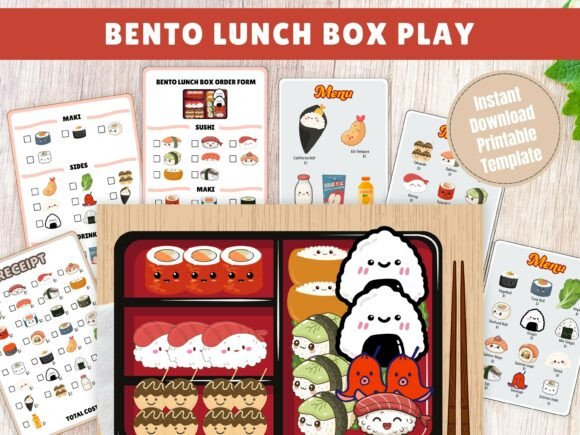
Pack Your Bento Lunch Box Pretend Play is a printable activity resource designed to facilitate structured imaginative play and fine motor skill development in young children. Unlike pre-assembled toy food sets, this resource requires preparation by the caregiver or educator before use. It functions as both a Montessori-inspired practical life exercise and an open-ended creative tool. When evaluating whether this specific type of pretend play pack your lunch box activity aligns with educational goals or home entertainment needs, it is essential to understand its dual nature as both a craft project and a learning game.
Understanding the Resource Format and Content
This activity is delivered as an instant download comprising digital files rather than physical goods. Users receive two PDF files containing 13 pages of food item templates formatted for both A4 and US Letter paper sizes. Additionally, the package includes JPEG, PNG, and SVG folders, offering versatility for those who may wish to use the images for digital projects or alternative crafting methods. The core component remains the printable template intended for physical cutting and assembly.
The design focuses on bento-style lunch packing, which inherently introduces concepts of spatial awareness and organization. Because the items are 2D paper cutouts rather than 3D plastic or wooden replicas, the tactile experience differs significantly from traditional play kitchens. This distinction is crucial for buyers comparing this printable against more expensive, durable toy alternatives. The SVG and PNG inclusions suggest potential value beyond simple printing, allowing users with cutting machines like Cricut or Silhouette to automate the cutting process, thereby reducing manual preparation time.
Educational Benefits and Skill Development
For parents and educators prioritizing developmental milestones, this bento lunch sorting game targets several specific areas. The primary benefit lies in executive function training. Children practice taking orders, observing color patterns, and arranging items within a confined space. This mimics real-world logistics and planning skills often found in Montessori environments. The activity moves beyond simple make-believe to include cognitive challenges such as categorization and following multi-step instructions.
Fine motor refinement is another significant factor. Cutting out intricate food shapes and manipulating flat paper pieces into a box requires dexterity and hand-eye coordination. For kindergarten-aged children, this serves as functional practice for scissor skills and pincer grasp strength. Furthermore, the open-ended nature of the activity allows for self-directed play once the initial structure is understood. Children can transition from following specific packing orders to creating their own menus, fostering creativity and autonomy.
Practical Considerations: Time and Materials
A critical tradeoff when choosing printable pretend play over ready-made toys is the investment of adult time and material resources. The manufacturer estimates a creation time of approximately 10 to 20 minutes. However, this estimate assumes efficient cutting and does not account for printing time or optional lamination. Caregivers must assess whether they have the bandwidth to prepare the activity before the child engages with it. If immediate engagement is required, this format may not be suitable without prior preparation.
Paper weight is a non-negotiable specification for durability. Standard printer paper (typically 70-80gsm) is generally insufficient for repeated handling by children. The recommendation to use 120–140gsm weighted paper is accurate; lighter stock will tear quickly and fail to provide the necessary tactile feedback. Users should also consider lamination if they intend to use the set frequently or in a classroom setting. While this adds to the cost and prep time, it significantly extends the lifespan of the paper food items. Without lamination or heavy cardstock, the activity should be viewed as ephemeral or single-use.
Age Appropriateness and Safety
While marketed for children aged 5 and up, the suitability depends heavily on individual developmental stages and supervision levels. The "5+" recommendation likely accounts for the scissor skills required to cut out the items independently. Younger children can certainly participate in the packing and sorting phases but will require adult assistance for the preparation phase. This makes it a collaborative activity for preschoolers rather than independent play for toddlers.
Safety is a paramount consideration with any small paper cutout. Unlike large plastic vegetables, these items can pose choking hazards or become damaged easily if mouthed. Educators and parents must evaluate the child’s tendency to put non-food items in their mouth before introducing this bento lunch sorting game. In group settings like daycares, constant supervision is necessary to prevent accidental ingestion or destruction of the materials.
Comparing Alternatives and Use Cases
Determining whether Pack Your Bento Lunch Box Pretend Play is the right choice involves comparing it against available alternatives based on specific goals.
- Best for Budget-Conscious Variety: If the goal is to introduce a wide variety of food types without purchasing multiple expensive toy sets, this printable offers high value. The cost per item is negligible compared to wooden or felt food.
- Best for Specific Curriculum Integration: Teachers focusing on cultural studies, nutrition, or specific math concepts (like sorting and patterning) will find the customizable nature of printables superior to fixed toy sets. The ability to print only what is needed for a specific lesson reduces waste and clutter.
- Alternatives for Durability: If the primary need is a long-term toy that can withstand years of rough play or unsupervised access, wooden or fabric food sets are superior investments. Paper printables cannot match the longevity of manufactured toys.
- Alternatives for Sensory Play: For children who require rich sensory feedback, 2D paper may feel underwhelming. Playdough, kinetic sand, or real cooking activities provide better proprioceptive input than cutting and sorting paper.
Making the Final Decision
Pack Your Bento Lunch Box Pretend Play represents a versatile, low-cost entry point into structured imaginative play and early learning games. It excels as a supplementary educational tool that bridges the gap between craft and cognitive development. The inclusion of multiple file formats adds technical flexibility for users with varying equipment.
However, success with this product relies on realistic expectations regarding preparation and durability. It is not a "set and forget" toy but rather a project-based activity. Buyers should confirm they have access to appropriate paper stock and are willing to invest the initial setup time. When these logistical requirements are met, the activity provides a meaningful platform for developing observation, arrangement, and fine motor skills in a culturally relevant context. Ultimately, it is best suited for caregivers and educators who value customization and active participation over passive, long-lasting play objects.